
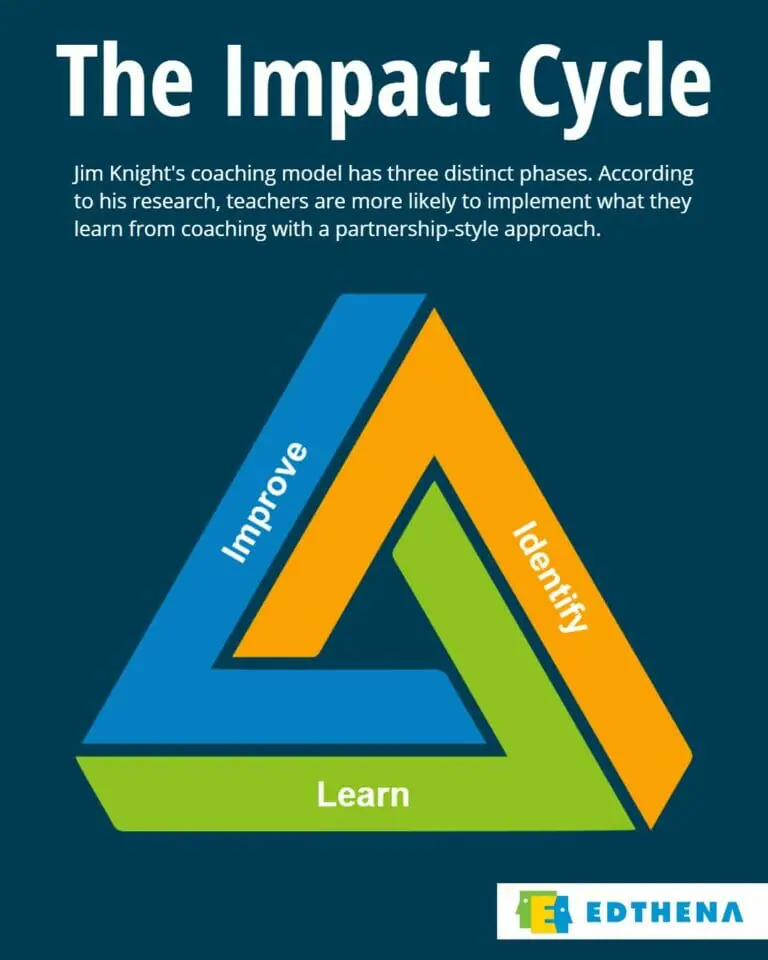
Teachers should be empowered through professional development that helps them refine their craft and see tangible results in the classroom. When instructional coaching follows Jim Knight’s Impact Cycle—Identify, Learn, Improve—professional development becomes a continuous process rather than a one-time event. My recent Number Sense in K–2 training offered a clear example of how these phases guide teacher learning and how technology can amplify engagement and reflection throughout the cycle.

From Training to Learning
During the first quarter of school, I facilitated a professional development session for our school’s 18 K–2 teachers focused on strengthening early number sense routines and modeling student thinking during daily number talks. Each grade level met separately during their PLCs to ensure that discussions and examples were developmentally appropriate. Teachers practiced conducting mock number talks and explored routines such as Which One Doesn’t Belong? and Math Flip—activities they could immediately bring into their classrooms.
This phase represented the LEARN stage of Knight’s (2017) cycle, in which the coach helps teachers master a specific strategy before implementing it. Teachers valued the session’s hands-on approach—seeing and practicing new strategies rather than simply hearing about them.
Technology also played a vital role. Canva visuals supported conceptual understanding, the Smart Panel made modeling more visible, and QR codes linked participants directly to ready-to-use classroom resources. These purposeful design choices demonstrated how technology can enhance professional learning by making it more interactive, accessible, and relevant.
Liao et al. (2021) highlight that authentic, classroom-connected coaching experiences—especially those that foster engagement—help teachers integrate new strategies with greater confidence. After this session, many teachers expressed that seeing number talks modeled and signing up for a modeled version in their classrooms helped them visualize instructional flow and student dialogue more clearly.
Coaching Characteristics Matter
The most meaningful outcome of this professional development was entering the session with teachers’ needs at the forefront. Because teachers felt comfortable sharing their questions and uncertainties, our discussions became richer and allowed us to identify and address misconceptions about early number sense.
According to Gallagher et al. (2024), effective instructional coaches exhibit strong relationship-building, thoughtful questioning, and responsiveness—qualities that align closely with Knight’s (2017) partnership principles. Establishing trust created a safe environment where teachers could honestly examine and collaboratively improve their practice.
This environment also opened the door for differentiated support. Some teachers quickly mastered the routines, while others needed more guidance, such as micro-modeling number sense routines within their own classrooms. In future sessions, I plan to incorporate extension activities and small-group coaching to meet varying readiness levels—an approach consistent with Knight’s emphasis on personalized, job-embedded learning during the LEARN phase.
Improving Through Reflection and Feedback
The IMPROVE phase of the Impact Cycle emphasizes applying new strategies, gathering data, and refining practice. To extend this phase beyond the training day, I will use a digital reflection form so teachers can share their experiences after implementing routines. Their reflections will highlight both successes and challenges, helping guide future coaching cycles.
Many teachers requested additional examples of number talks for students with varying levels of number sense. Through digital follow-ups and shared collaboration spaces, I can collect classroom examples, curate videos, and facilitate peer feedback to help teachers strengthen their routines. This aligns with Knight’s (2017) concept of improvement through evidence and reflection and echoes Liao et al.’s (2021) findings that ongoing, job-embedded coaching enhances technology-supported pedagogy.
Lessons for Technology-Enhanced Coaching
Reflecting on this experience through the lens of the Impact Cycle revealed several key principles for designing effective, technology-enhanced professional learning:
-
Model before requirement. Teachers need to see strategies in action—especially when technology is involved.
-
Prioritize reflection. Provide structured opportunities for teachers to analyze outcomes, share feedback, and adjust practice.
-
Use tech as a connector, not a distraction. Interactive panels, digital visuals, and online links enhance engagement when tied to clear instructional goals.
-
Coach through partnership. As Gallagher et al. (2024) note, impactful coaching is relational. Teachers embrace technology more readily when they feel supported rather than evaluated.
Conclusion
The Number Sense in K–2 training reaffirmed the power of the Impact Cycle in guiding meaningful professional growth. The LEARN phase came alive through modeling, collaboration, and purposeful technology integration, while the IMPROVE phase continues through structured reflection and feedback.
Research by Liao et al. (2021) and Gallagher et al. (2024) underscores that authentic practice, trust-based coaching, and intentional technology use are key to helping teachers implement new strategies effectively. When professional development follows this model, teachers don’t just attend training—they grow through an ongoing, evidence-based partnership that elevates both their confidence and classroom impact.


I really enjoyed reading your post about the Impact Cycle and how you used it during your Number Sense training. You did a great job showing how the Learn and Improve phases worked together to help teachers grow. I liked how you gave teachers time to practice and reflect instead of just listening to information. That hands-on approach makes professional learning more meaningful (Knight, 2017).
ReplyDeleteIt was also great to see how you used technology in a way that supported learning rather than just adding more tools. The use of Canva visuals and QR codes made it easier for teachers to connect what they were learning to their own classrooms. That fits with what Liao et al. (2021) said about how real classroom experiences build teacher confidence.
I also agree with your point about trust. When teachers feel safe asking questions and sharing what they don’t understand, they learn more and take bigger risks. Gallagher et al. (2024) remind us that strong coaching relationships are built on trust and support, and your example showed that perfectly.
Your plan to keep the reflection process going after training really stood out. Using digital forms and shared spaces keeps the learning alive even after the session ends. You are helping teachers not just attend training but grow through it.